2026 FMCSA Hours-of-Service Changes: What Every Truck Driver Must Know
- The Core Problem: Why the 14-Hour Rule Misses the Mark
- Current Rules vs. 2026 Pilot Rules
- The Split Duty Period Pilot: Pausing the Clock
- How the SDP Pause Works
- Compliance Scenario: Surviving the Loading Dock
- The Flexible Sleeper Berth Pilot: 6/4 and 5/5 Splits
- How the FSB Split Works
- Compliance Scenario: Aligning Rest with Reality
- What Trucking Organizations Are Saying
- The Real-World Impact on Fleet Operations
- Data Collection and VTTI Testing
- Enforcement and HOS Checkers
- The Road to HOS Reform
- The 2020 HOS Update (2020)
- Pilot Programs Advanced (2025)
- Pre-Testing Commences (March 2026)
- Potential Permanent Reform (2027 & Beyond)
- Frequently Asked Questions (FAQs)
- What is the Split Duty Period Pilot Program?
- Can I use the 6/4 or 5/5 sleeper berth split right now?
- Does the 3-hour pause count against my 11 hours of driving time?
- What happens after the 2026 pilot programs end?
If you drive a commercial truck, you already know the frustration of the 14-hour clock. Once you log on duty, that timer doesn’t care if you’re stuck in traffic, fighting severe weather, or waiting three unpaid hours at a loading dock. You’re forced to race against a digital countdown, often having to rest when you aren’t tired and drive when you are.
The Federal Motor Carrier Safety Administration (FMCSA) has finally acknowledged what drivers have been saying for years. As part of a new federal push to improve driver working conditions, the agency has teamed up with the Virginia Tech Transportation Institute (VTTI) to launch two major initiatives in 2026: the Split Duty Period (SDP) and Flexible Sleeper Berth (FSB) pilot programs.
If these data-driven tests succeed, they could permanently reshape federal trucking regulations and hand vital autonomy back to the drivers who actually run the freight. Here is a breakdown of what these new rules look like in practice, how they compare to current laws, and what they mean for the industry.
The Core Problem: Why the 14-Hour Rule Misses the Mark
Under current Hours of Service (HOS) rules, a commercial motor vehicle (CMV) driver has exactly 14 consecutive hours to complete a maximum of 11 hours of driving once they come on duty.
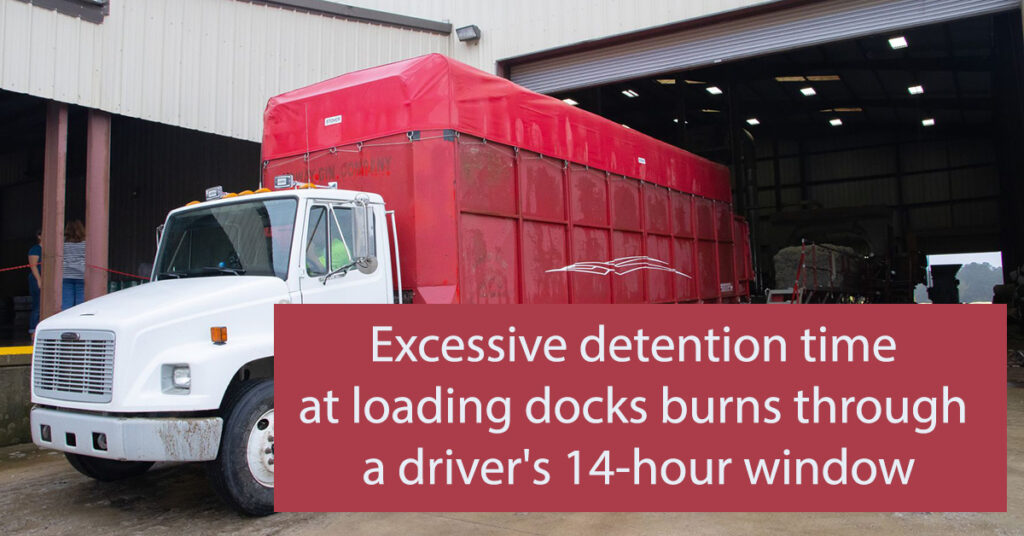
The real damage is done by the word consecutive. When you arrive at a shipper and are forced to wait three hours for a load to be ready, that detention time subtracts directly from your 14-hour window. Trucking advocacy groups argue this inflexible timer creates a dangerous incentive: drivers who lose hours to detention feel immense pressure to push through fatigue later in the day just to make up for lost miles.
Lewie Pugh, Executive Vice President of the Owner-Operator Independent Drivers Association (OOIDA), recently summed up the industry’s stance: “Hours-of-service regulations that dictate a truck driver’s work schedule are overly complex, provide little flexibility and in no way reflect the physical capabilities or limitations of individual drivers.”
The FMCSA’s 2026 pilot programs are explicitly designed to test real-world solutions to this exact bottleneck.
Current Rules vs. 2026 Pilot Rules
Before getting into the weeds, here is how the proposed 2026 FMCSA pilot programs stack up against the federal regulations you drive under today:
Key insight: The pilot programs do not increase your total allowed driving time (which stays capped at 11 hours). Instead, they give you flexibility in how you manage those hours within your shift.
The Split Duty Period Pilot: Pausing the Clock
The Split Duty Period (SDP) pilot program is a direct attack on the detention time epidemic. According to the FMCSA’s Federal Register Notice, the objective is simple: let drivers delayed at loading docks pause their clock so they don’t lose available drive time.
How the SDP Pause Works
If you are participating in this pilot, you can legally pause your 14-hour driving window for a minimum of 30 consecutive minutes, up to a maximum of three consecutive hours.
To qualify for the pause, you must log the time in one of the following statuses:
- Off-Duty: Time logged completely off-duty.
- Sleeper Berth: Time spent resting in the berth.
- On-Duty / Not Driving: Time spent on-duty but not driving at the specific location where you are picking up or delivering freight.
- A Combination: Any consecutive combination of the above that totals between 30 minutes and three hours.
Compliance Scenario: Surviving the Loading Dock
Imagine you’re an owner-operator who starts the 14-hour clock at 6:00 AM. At 8:00 AM, you arrive at a distribution center and spend the next three hours waiting for a dock door—a notoriously common delay.
Under standard regulations, your 14-hour clock keeps bleeding. By the time you are loaded and rolling at 11:00 AM, you have permanently lost three hours of potential driving time.
Under the 2026 SDP Pilot Program, you log those three hours at the shipper as “on-duty/not driving.” Because you are at the pickup location, this effectively pauses the 14-hour window. When you leave the facility at 11:00 AM, your driving window extends by those three hours, completely preserving your 11 hours of available driving time for the shift.
The Flexible Sleeper Berth Pilot: 6/4 and 5/5 Splits
While the SDP program targets scheduling delays, the Flexible Sleeper Berth (FSB) pilot program tackles sleep hygiene and biological fatigue.
Currently, drivers can meet their mandatory 10 consecutive hours off duty by splitting their sleeper berth time, but federal law restricts you to 8/2 or 7/3 combinations. This means you must stay in the sleeper berth for at least seven or eight uninterrupted hours. If you’ve ever tried to sleep for eight straight hours in a noisy truck stop on a Tuesday afternoon, you know how unnatural that can be.
The FSB pilot introduces two highly requested split combinations: the 6/4 and 5/5 splits.
How the FSB Split Works
Participating drivers can divide their 10-hour off-duty requirement into two distinct rest periods without triggering an HOS violation, provided they hit a few specific marks:
- Neither rest period is shorter than two consecutive hours.
- One rest period consists of at least five consecutive hours in the sleeper berth.
- The total of the two periods equals at least 10 hours.
Compliance Scenario: Aligning Rest with Reality
Consider a driver who naturally wakes up fully rested after six hours in the sleeper berth. Under standard rules, leaving the berth before hitting seven hours triggers a severe violation. Later in the day, when that inevitable afternoon energy slump hits, the driver only has a two- or three-hour break available to recover.
Under the 2026 FSB pilot rules, that driver could legally sleep for six hours in the berth and start driving while sharp and alert. Later in the shift, when fatigue sets in, the driver could take a restorative four-hour off-duty break. This flexibility lets you align your driving schedule with your body’s natural rhythms, rather than a government timer.
What Trucking Organizations Are Saying
The push for the 2026 pilot programs is the result of intense lobbying, executive orders, and shifting perspectives among major industry players.
Owner-Operator Independent Drivers Association (OOIDA)
OOIDA has been the loudest critic of the rigid 14-hour clock. They maintain that the Split Duty Period pilot is a vital first step in solving the detention time crisis that forces tired drivers to stay behind the wheel just to outrun a countdown.
American Trucking Associations (ATA)
The ATA has consistently supported data-driven flexibility, particularly regarding sleep schedules. The Flexible Sleeper Berth Pilot Program’s inclusion of 6/4 and 5/5 splits is actually based in part on a joint proposal submitted by the ATA and the Minnesota Trucking Association. Their stance is that allowing drivers to break up sleep in a way that matches natural circadian rhythms will actively reduce fatigue-related accidents.
Federal Motor Carrier Safety Administration (FMCSA)
The regulatory agency is cautiously optimistic but insists on empirical data before making anything permanent. Spurred by recent Pro-Trucker executive initiatives, the FMCSA maintains that the goal is to safely accommodate drivers’ demands for flexibility while meticulously ensuring that any changes maintain or improve current highway safety standards.
The Real-World Impact on Fleet Operations
If the FMCSA eventually makes these pilot rules permanent, the daily reality of moving freight would shift significantly:
- Detention Time Costs: Drivers and owner-operators would no longer bear the full financial brunt of facility delays, potentially saving thousands of dollars annually in lost mileage.
- Driver Retention: Burnout drives industry turnover. Allowing drivers to sleep when tired and drive when alert drastically improves daily quality of life.
- Parking Shortages: Splitting rest periods more dynamically could help ease the critical truck parking shortage. You could take shorter breaks during peak parking hours and secure long-term spots during off-peak times.
- Productivity: Fleets would likely see improvements in asset utilization, as drivers would be less likely to run out of legal hours just a few miles short of a receiver due to earlier delays.
Data Collection and VTTI Testing
These programs aren’t just hypotheticals—they are actively funded federal studies. According to the FMCSA’s official announcements in March 2026, the agency partnered with researchers at the Virginia Tech Transportation Institute (VTTI) to conduct a six-week pre-testing phase.
They started with a small group of 18 commercial drivers (nine for each program) to fine-tune the data collection. To offset the hassle, the FMCSA even compensates drivers up to $600 for completing the study tasks. Following this phase, the FMCSA plans to roll out the full pilot programs over four-month testing periods to approximately 256 drivers per program to gather hard data on fatigue and safety.
Enforcement and HOS Checkers
A crucial warning: Navigating the 14-hour window, the 11-hour limit, and sleeper berth splits requires absolute precision. Unless you are officially accepted into these pilot programs by the FMCSA, attempting a 6/4 split or a 3-hour clock pause remains a direct violation of federal law.
The stakes for non-compliance are high. HOS violations lead to immediate out-of-service (OOS) orders, steep civil penalties, and severe hits to a motor carrier’s Compliance, Safety, Accountability (CSA) profile.
Because Electronic Logging Devices (ELDs) are programmed to flag standard rule violations, many professional drivers and fleet dispatchers rely on supplementary HOS violation checkers to pre-plan their trips. An accurate calculator lets you simulate your available hours before committing to a dispatch. As these new rules are tested, making sure your compliance tools are up to date will be the only way to utilize the flexibility without risking a massive fine at a weigh station.
The Road to HOS Reform
The industry has fought a long battle for regulatory common sense. The timeline of HOS evolution shows a slow but steady shift toward trusting the driver:
The 2020 HOS Update (2020)
FMCSA implements moderate flexibility, officially allowing the 7/3 sleeper berth split and permitting on-duty/not driving time to satisfy the 30-minute break requirement.
Pilot Programs Advanced (2025)
FMCSA publishes Federal Register Notices proposing the Split Duty Period and Flexible Sleeper Berth pilot programs to gather data on increased driver autonomy.
Pre-Testing Commences (March 2026)
FMCSA and VTTI begin recruiting and testing an initial group of 18 commercial drivers to collect vital safety and fatigue data.
Potential Permanent Reform (2027 & Beyond)
Pending successful data analysis proving that enhanced flexibility maintains or improves safety, these pilot exemptions could become permanent federal law.
Frequently Asked Questions (FAQs)
What is the Split Duty Period Pilot Program?
It is a 2026 FMCSA testing initiative that allows approved truck drivers to pause their 14-hour daily driving window for between 30 minutes and 3 hours. This is primarily designed to stop drivers from losing their available drive time while waiting at backed-up loading docks.
Can I use the 6/4 or 5/5 sleeper berth split right now?
No, unless you have formally applied and been officially accepted by the FMCSA into the Flexible Sleeper Berth Pilot Program. Everyone else must stick to the standard 10-hour consecutive off-duty rule or the approved 8/2 and 7/3 splits. Using unauthorized splits will trigger a severe HOS violation.
Does the 3-hour pause count against my 11 hours of driving time?
No. The 3-hour pause (when properly taken as off-duty, sleeper berth, or on-duty/not driving at a facility) only pauses the 14-hour on-duty window. It does not subtract from your total 11 hours of allowable driving time for the day.
What happens after the 2026 pilot programs end?
VTTI and the FMCSA will analyze the safety data, fatigue metrics, and driver feedback. If the data proves that flexible schedules don’t cause an increase in accidents, the FMCSA may initiate a formal rulemaking process to make these options a permanent part of the Federal Motor Carrier Safety Regulations.
Quality & Expertise Assurance

Katie Watson
Passionate about the trucking industry with hands-on experience in dispatch, fleet office management, and years behind the wheel. Dedicated to logistics, efficiency, and keeping freight moving every mile of the journey.

Bahadur Singh
15+ years in trucking with experience as a driver, truck driving school instructor, and founder of trucking blog TruckServicez.com. Hauled freight across Canada and the US. Now retired from trucking and working in insurance and international flight booking.