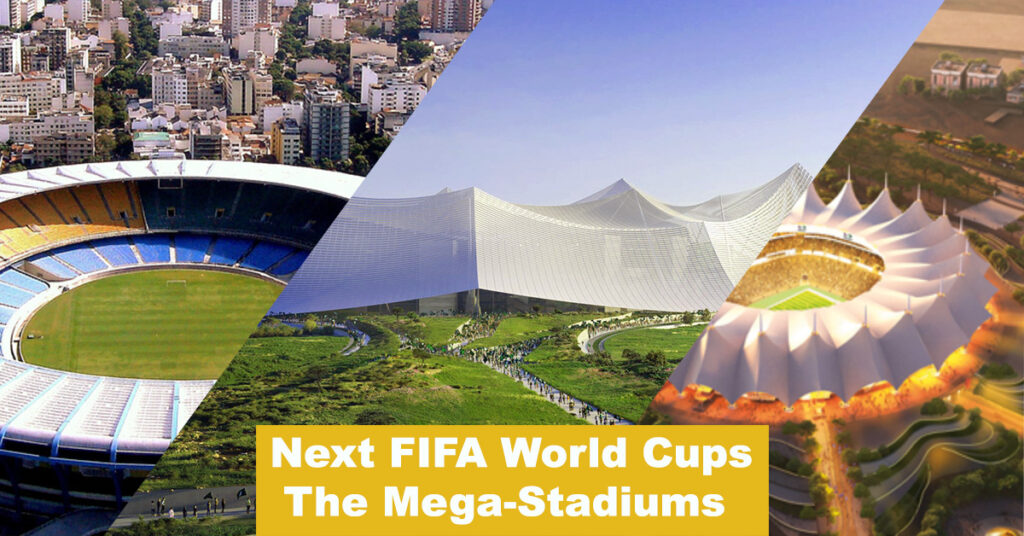
Next FIFA World Cups: The Mega-Stadiums and Desert Cities Hosting the World Cup Through 2034
As the 2026 FIFA World Cup shatters attendance records across North America, the global football ecosystem is already locking in its next decade of evolution. Following historic decisions by FIFA, the roadmap from 2027 to 2034 promises unprecedented milestones: a complex centenary spanning three continents, a massive desert megaproject fueled by sovereign wealth, and the continued structural expansion of the women’s game.
If the logistical footprint of 2026 feels massive, the architectural ambition of the next four World Cups will permanently redefine how global mega-events are hosted. Here is the verified roadmap for the future of international football.
2030: The Tri-Continental Centenary and the Battle for the Final
To celebrate the 100th anniversary of the first World Cup (held in 1930), FIFA approved a highly complex hosting model that bridges multiple distinct footballing cultures. The 2030 tournament will feature matches played across six countries and three continents.
The tournament will begin exactly where it started a century ago: South America. Uruguay’s historic Estadio Centenario in Montevideo – the hallowed ground where the first final was played – will host the inaugural centenary match, alongside commemorative opening games in Argentina and Paraguay.
But the real story of 2030 lies across the Atlantic, where the primary hosts – Spain, Portugal, and Morocco – are locked in a fierce, high-stakes battle over who gets to host the Final.
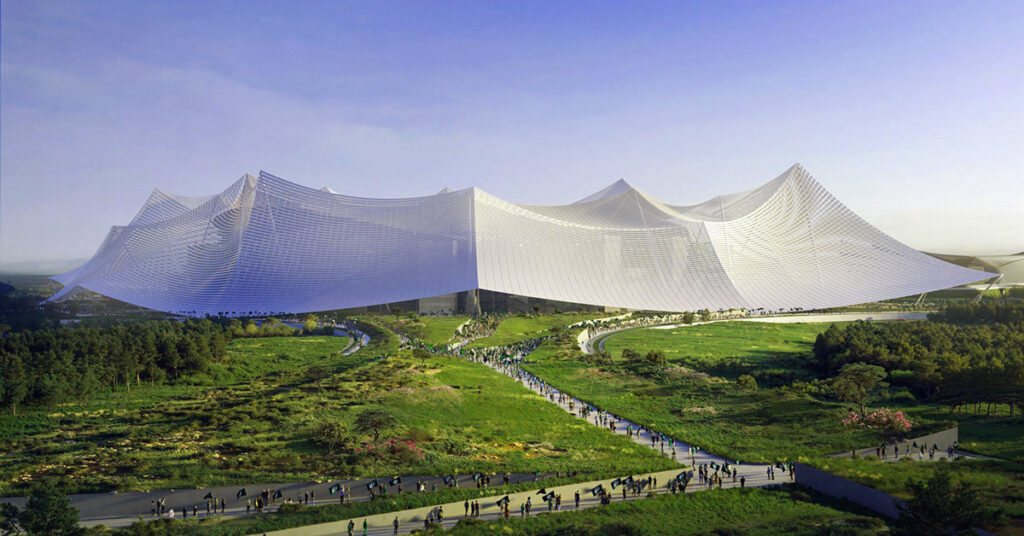
Morocco’s inclusion is a historic triumph, bringing the World Cup to North Africa for the very first time. To mark the occasion, Morocco is not just building a stadium; they are attempting to build the largest football venue on the planet. The planned Hassan II Stadium in Casablanca is designed to hold a staggering 115,000 fans.
This behemoth of a project has set up a massive geopolitical and sporting rivalry with Spain. Madrid’s legendary Santiago Bernabéu recently completed a billion-euro modernization project and is the traditional favorite to host the climax of the tournament. The tug-of-war between Casablanca’s sheer scale and Madrid’s undeniable prestige will be the defining narrative leading up to 2030.
2034: Saudi Arabia’s Sci-Fi Sporting Ambition
Saudi Arabia was officially confirmed as the sole host of the 2034 FIFA World Cup at the Extraordinary FIFA Congress in late 2024. This marks the first time a massive 48-team tournament will be hosted by a single nation, completely avoiding the complex border logistics seen in 2026 and 2030.
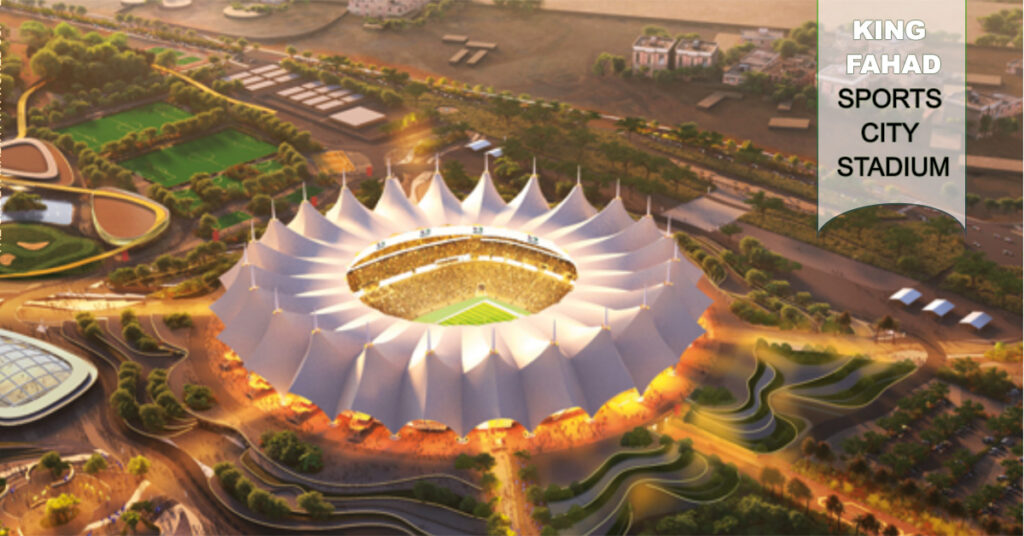
However, looking at Saudi Arabia’s bid simply as a list of venues entirely misses the point. The Kingdom is using the World Cup as the ultimate vehicle to showcase its Vision 2030 economic megaprojects. They aren’t just building stadiums; they are embedding them into futuristic urban experiments.
The most audacious example is the NEOM Stadium. Planners intend for this 46,000-seat venue to be suspended 350 meters in the air, embedded entirely within the superstructure of The Line – Saudi Arabia’s mirrored, 170-kilometer-long linear city project. If completed as designed, it would be a feat unlike anything ever attempted in modern sporting architecture.
The ambition extends to Qiddiya, an entertainment mega-city near Riyadh, where the Prince Mohammed bin Salman Stadium is pitched to be built directly into the sheer cliffs of the Tuwaiq Mountains, featuring immense, futuristic LED exterior integrations.
Meanwhile, the traditional centerpiece, the King Salman International Stadium in Riyadh, is expected to hold over 92,000 fans and host the opening match. Because summer temperatures in the Arabian Peninsula are extreme, the 2034 World Cup is widely expected to be shifted to the winter months, mirroring the schedule utilized by Qatar in 2022.
The Women’s World Cup: Breaking Ground in Brazil (2027)
Parallel to the men’s tournaments, the FIFA Women’s World Cup is experiencing vital structural expansion, moving away from shared venues and toward massive, dedicated infrastructure.
From June 24 to July 25, 2027, the Women’s World Cup will be held in South America for the very first time. Brazil will host 32 teams across eight world-class cities. Unlike the sci-fi construction boom of 2034, Brazil’s bid won on practicality and legacy, heavily utilizing the modernized infrastructure left over from the 2014 men’s tournament and the 2016 Olympics.
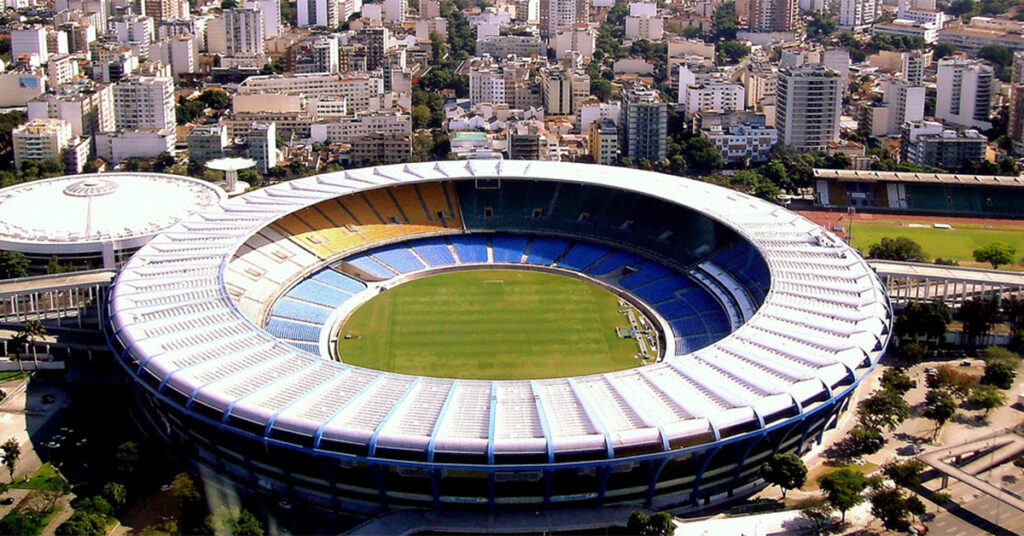
The legendary Estádio do Maracanã in Rio de Janeiro is poised to feature prominently, likely hosting the final, bringing the pinnacle of the women’s game to one of the most famous sporting cathedrals on earth.
(Looking ahead to 2031, the tournament is expected to expand to 48 teams. While a massive joint bid from the United States, Mexico, Costa Rica, and Jamaica is currently generating headlines with promises of NFL-sized crowds, the official host decision remains unconfirmed and will be ratified by the FIFA Congress later in 2026.)
Quality & Expertise Assurance

Sam C
Sam is an independent sports journalist known for breaking exclusive football transfer news, breaking squad updates, and delivering real-time Premier League reporting. With a strong track record of tracking high-profile player movements and club updates, he joins the team as a freelance sports journalist to bring sharp, timely insight into the modern game.